
Sainthood in the modern age: my encounter with Kruba Noi
From Don Bosco to the Buddha: my journey between two worlds
I grew up among the Salesians. At fourteen I walked through the doors of their vocational school for the first time, and by twenty-one I was already on the other side of the desk, teaching in the very institution that had formed me. For more than a decade, Don Bosco and his vision of holiness shaped the way I saw the world.
Then, at thirty-five, something inside me asked for more. In 2010 I took a sabbatical year — a decision that would change my life for good. India, Nepal, Thailand: three countries, three spiritual traditions, endless questions about the nature of holiness and of the spiritual path.
In an Indian ashram I met the teacher Umesh, whom years later I would host in my Italian home. In Thailand I met the woman who would become my wife. And above all, I discovered that holiness has neither geographical nor doctrinal borders.
The question I carry with me
After living for three months in the Salesian community of the Pontifical University in Rome, after passing through Indian ashrams and Buddhist monasteries, one question keeps coming back to me: is it still possible to become a saint today?
I am not talking about the holiness of halos and Vatican-certified miracles. I am talking about that total dedication to spiritual search I have seen in the eyes of monks, gurus and teachers — the same light that shone in Don Bosco, and that I found again, unexpectedly, in a young Thai monk named Kruba Noi.
30 August 2023: the day I will never forget
Every summer for over ten years, my wife, our daughter Elisa and I have returned to Thailand for three months. It is our way of keeping the roots alive, of raising Elisa between two cultures.
That 30 August 2023 I was at our home in NaNoi, in the province of Nan — not far from where, years earlier, I had lived with the monks of Wat Pah Korwang. I decided to take Elisa, who was ten, to visit Wat Chetawan, a monastery I had heard of but never seen.
We rode through landscapes I know well: green hills, tiny villages where time seems to have stopped, rice paddies flooded by the rainy season. After the last bend the monastery appeared, majestic, entirely wrapped in green.
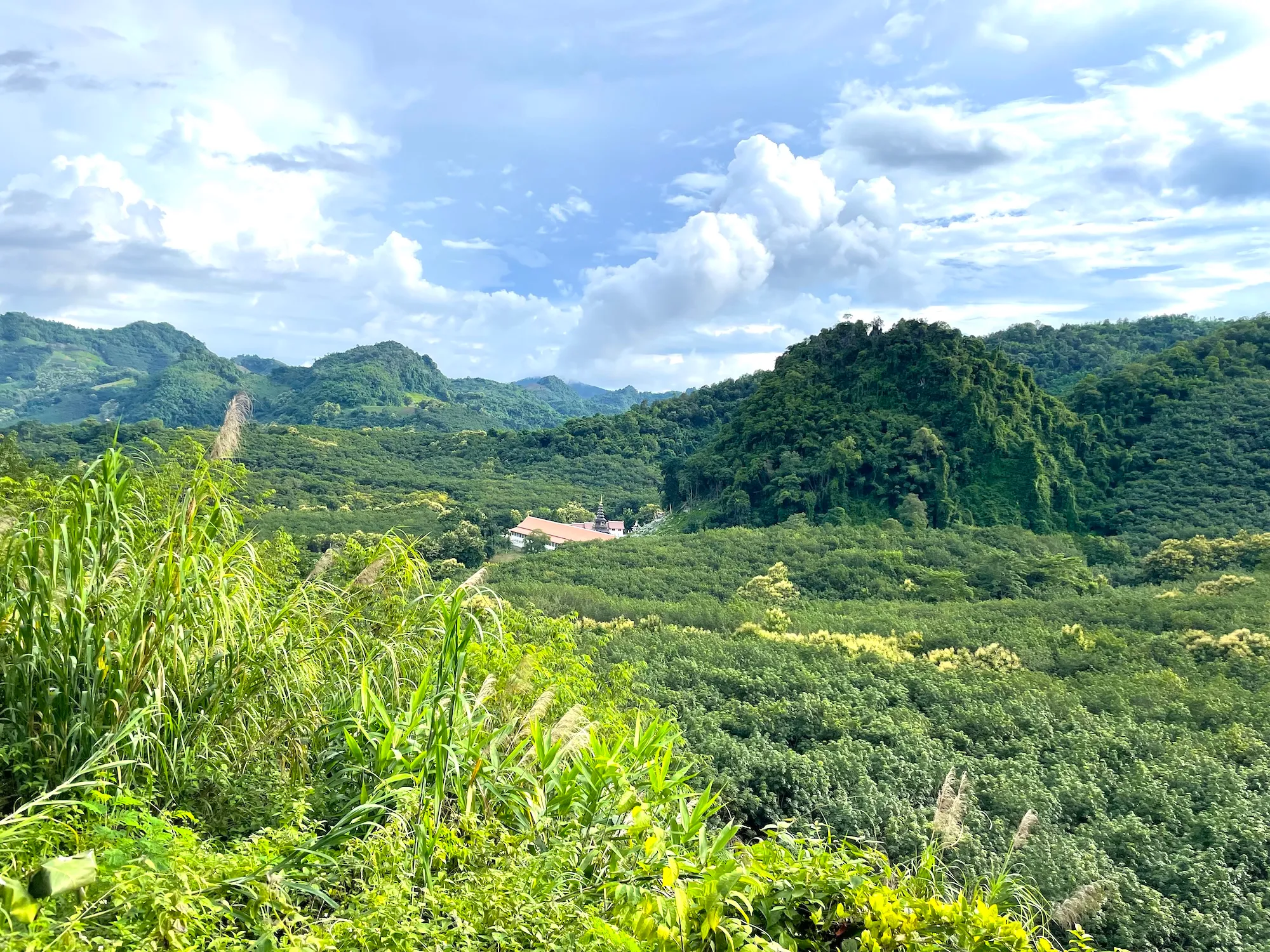
There was something special in the air that day, a deep peace that anyone who has practised meditation recognises immediately. An elderly monk gave me his blessing, tying a sacred bracelet around my wrist as they do in these parts. I spoke briefly with some of the young monks. Everything seemed ordinary, and yet…
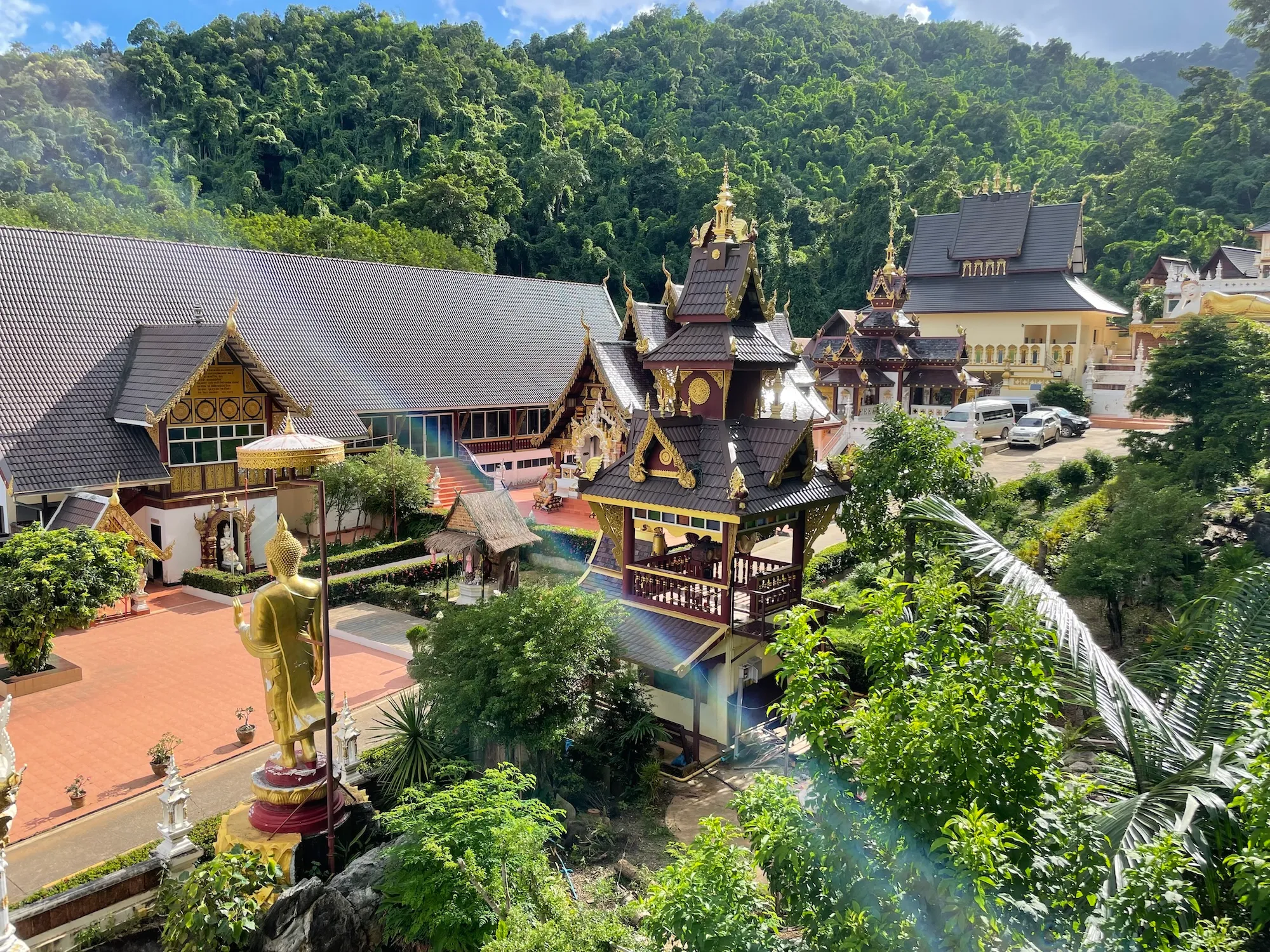
The next day my wife woke me with news that froze me: “Kruba Noi is dead!”
Who Kruba Noi was: a life I only just brushed against
I had never met Kruba Noi Yanwichai in person, but his story resonated deeply with my own path. Born in 1989 in the village of NaNoi — the very place where I was staying — he had entered the monastery as a child, just like the boys I had come to know during my own monastic stays.
His spiritual search reminded me of mine. Like me, he had looked for authentic teachers. He had found Kruba Boonchum Yanasanwaro, the “monk of three nations”, a master of the Thai Forest Tradition whose name I had heard often during my retreat at Wat Pah Korwang some years before.
The retreat that changed everything
At twenty-five, Kruba Noi had done something considered extreme even within the Buddhist monastic world: he had himself sealed inside a cave for 3 years, 3 months and 3 days.
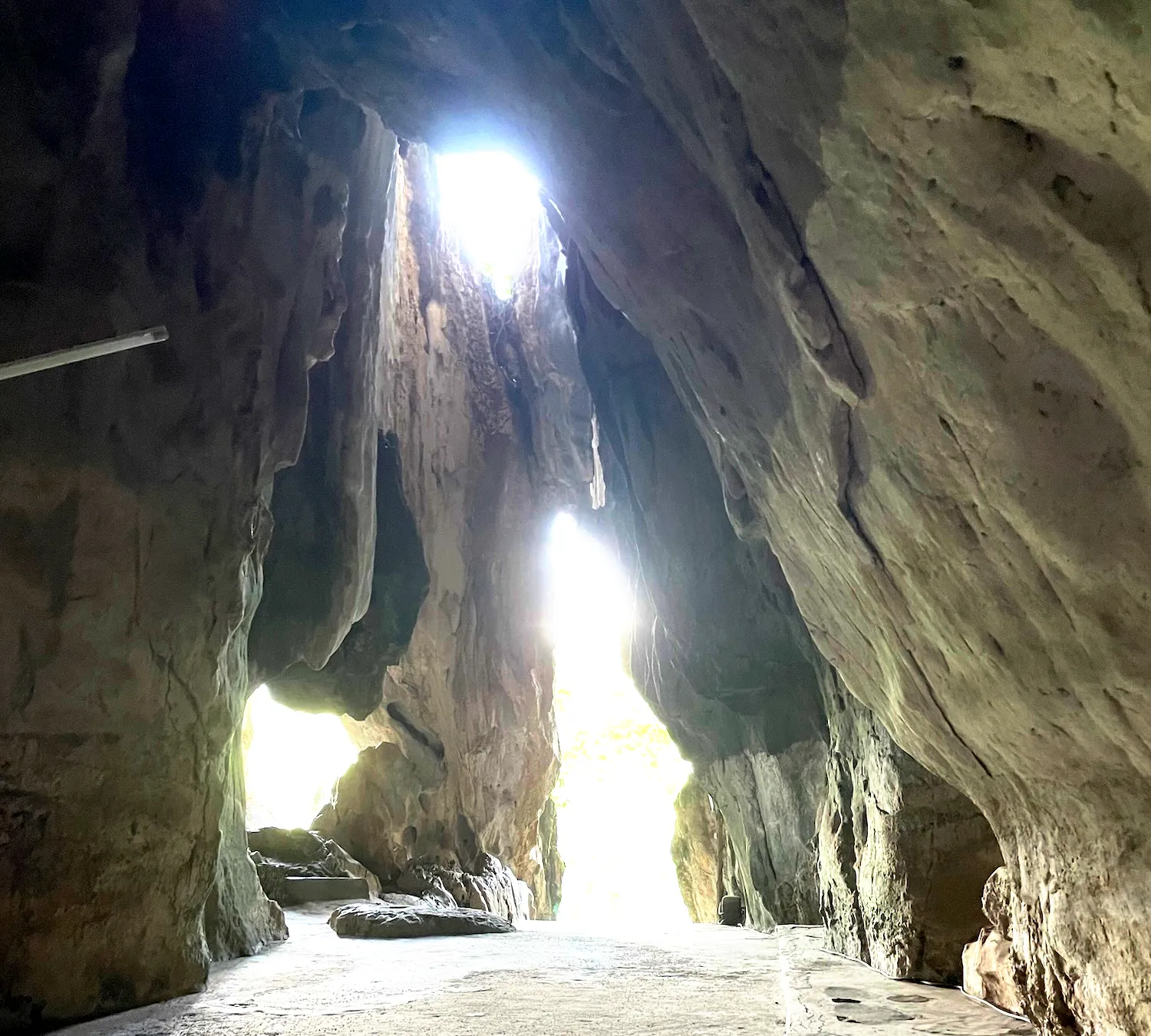
I have lived through ten days of monastic retreat and I know how intense they can be. I have practised vipassana meditation in India and I know the force of prolonged silence. But three years in a cave — that goes beyond anything I have ever experienced or watched anyone else do.
When he emerged from that retreat, pale and emaciated but radiant, his reputation spread across Thailand. Little Wat Chetawan became a place of pilgrimage. And I, without knowing it, had arrived there on the last day of his life.
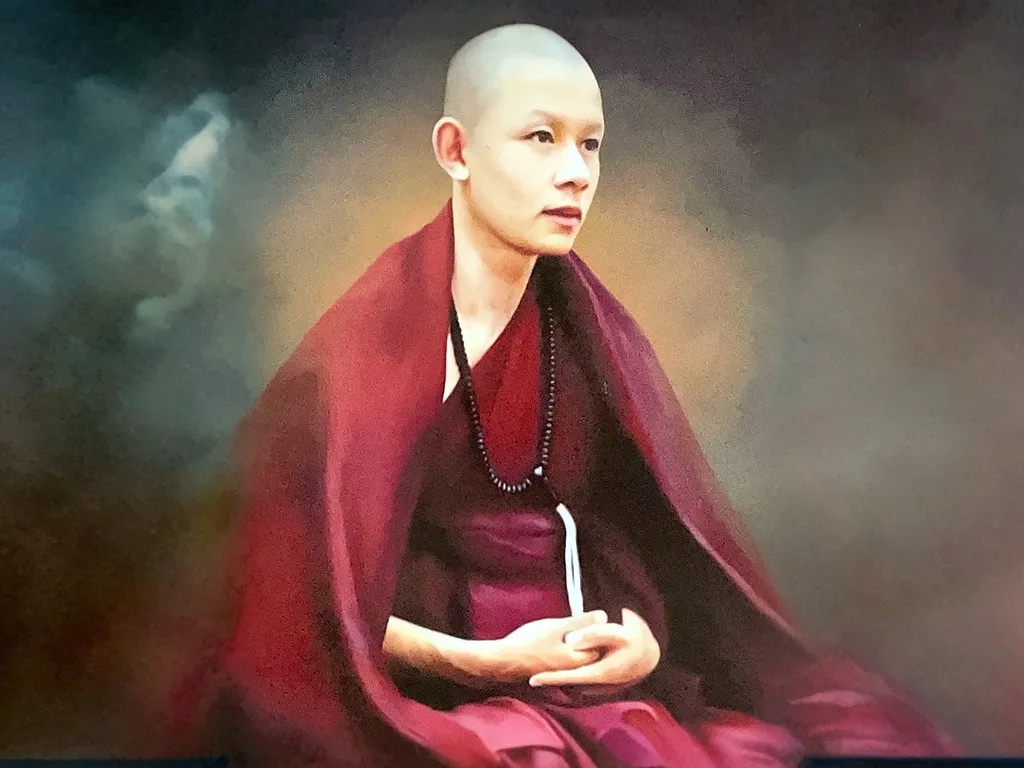
A foretold death: when the sacred breaks into the ordinary
The details of his death, which I gathered in the following days from the monks and from local people, have something extraordinary about them. The evening before, he had called his mother — a human, touching gesture — telling her that “they would come to take him” the next day. He had added that she should not worry: he had already given the monks precise instructions.
The following morning Elisa and I went back to the monastery. The atmosphere had changed completely. The funeral pyre had already been prepared in the middle of the courtyard, plain tree trunks laid out according to his wishes. Hundreds of people were arriving from all the surrounding villages.
That same evening, the cremation, exactly as he had asked. The national media were there, in the middle of a crowd, and I — a foreigner and yet not a stranger — felt I was witnessing something rare: the death of a man the local people considered a living saint.
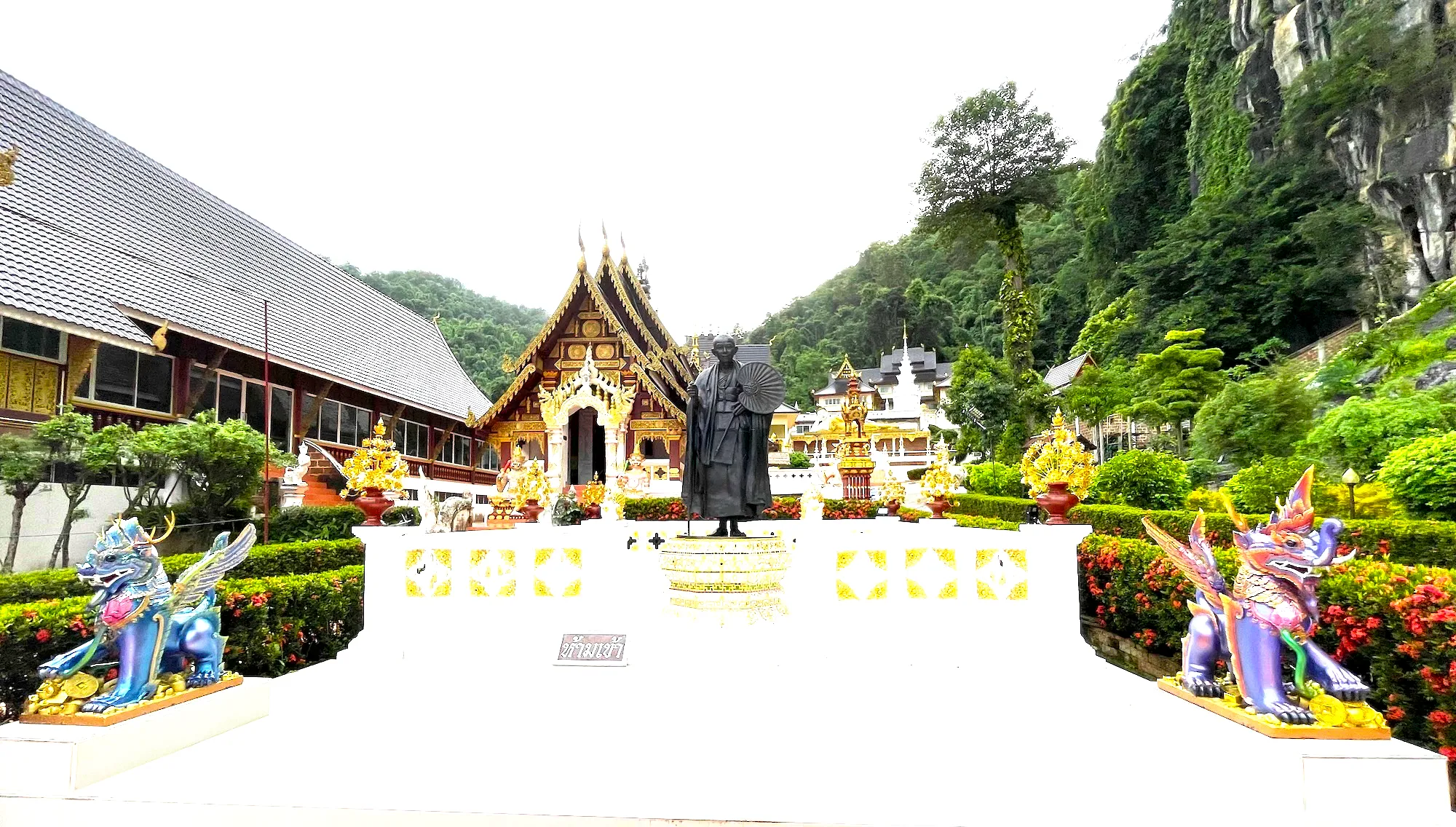
The holiness you do not expect
In my years among the Salesians I came to know Don Bosco’s holiness: industrious, joyful, devoted to the young. In Umesh’s ashram in India I experienced the way of bhakti, total devotion. At Wat Pah Korwang I touched the deep silence of Buddhist meditation.
Kruba Noi embodied a different kind of holiness — subtler, perhaps, and certainly less conspicuous than Mother Teresa’s or that of the great Christian saints. He had founded no religious order, performed no certified miracles, won no Nobel prizes.
And yet, seeing the devotion of the people, listening to the stories of lives he had transformed by his simple presence, I understood that I was witnessing something authentic. Holiness exists in the twenty-first century, but it often appears in forms our Western categories struggle to recognise.
The monastery today: a living legacy
On 2 September 2023, three days after Kruba Noi’s death, I registered the domain watchetawan.org to help the monastery make itself known, as I had done years earlier for Wat Pah Korwang and, before that, for the Indian ashram. It is my small way of serving these places that have given me so much.
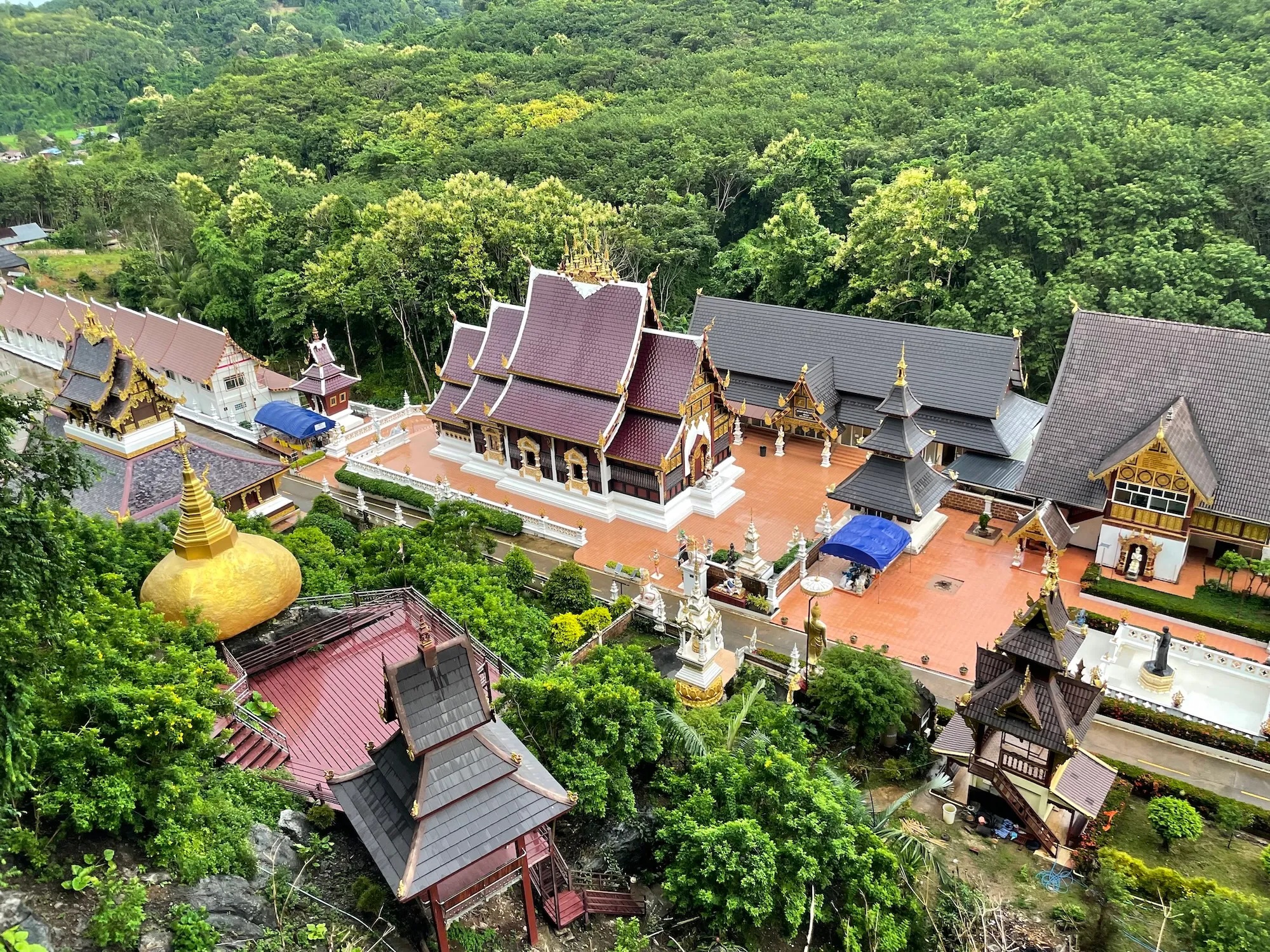
Wat Chetawan today is profoundly changed. What was a hermitage hidden in the forest has become an international spiritual centre where:
- Practitioners from all over the world come for meditation retreats
- Traditions meet: Thai and Burmese architecture, Chinese elements
- The practice continues: new monks follow in Kruba Noi’s footsteps
- Families like mine bring their children to let them touch a living spirituality
What I learned: a message for those who are searching
After years of spiritual searching across continents and traditions, after seeing holiness take such different forms — from Salesian charisma to Buddhist meditation, from Hindu devotion to Christian mysticism — I can say with certainty: the road to holiness is still open.
You do not need to be famous. You do not even need to be religious in the traditional sense. What I saw in Kruba Noi, in Umesh, in the monks of Wat Pah Korwang, in my old Salesian teachers, is always the same thing: total dedication to something greater than oneself.
For those who feel called
If you feel inside you that same restlessness that led me to leave a secure job for a sabbatical year that turned into a freelance life, if you find yourself asking about the deeper meaning of existence, if the word “holiness” both attracts and frightens you, then know this:
The path still exists. It may run through a Thai Buddhist monastery or an Indian ashram, through a Salesian community or a Christian hermitage. It may also run through an apparently ordinary life lived with extraordinary dedication.
I watched Kruba Noi die at thirty-four, after a life of intense spiritual practice. I watched my ten-year-old daughter receive a blessing from a monk a few hours before he left his body. I touched the sacred inside the everyday.
A closing invitation
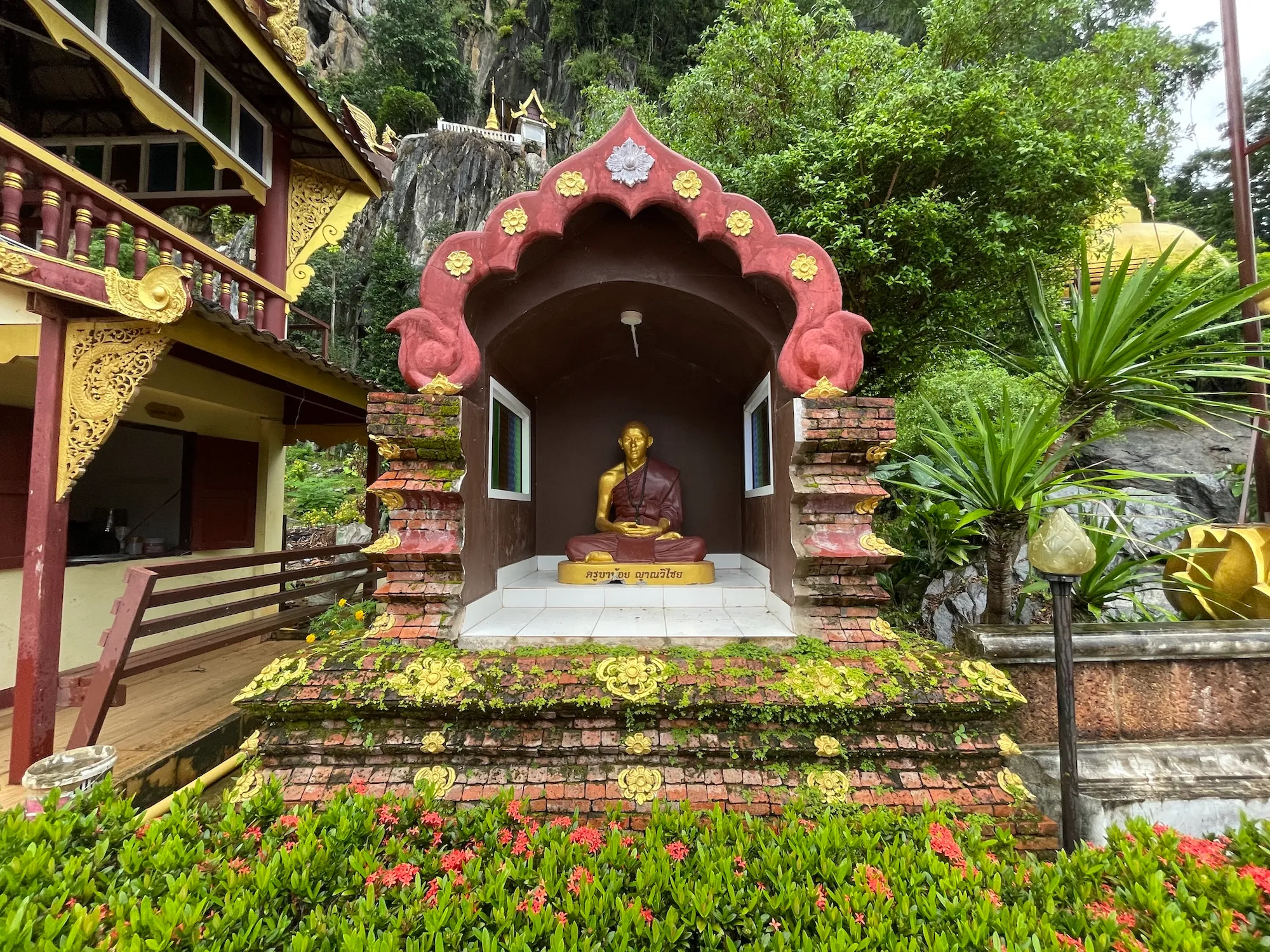
When I feel lost I go back in memory to that monastery, to that August evening when hundreds of people venerated a young monk who had chosen the hardest way: total renunciation in a world that preaches consumption, silence in a world of noise, holiness in an age that has forgotten it.
Kruba Noi’s story reminds us that we have a choice. We can go on living on the surface, or we can dare the depths. We can settle for the spiritual crumbs the modern world offers us, or we can go looking for the whole banquet.
Not everyone is called to withdraw into a cave for three years. But all of us are called to live with intention, with depth, with openness to mystery. That is the lesson I carry with me from 30 August 2023, the day when, without knowing it, I brushed against contemporary holiness.
Sources and links:
- Thai Forest Tradition
- Wat Chetawan — watchetawan.org
- Wat Pah Korwang — watpahkorwang.org
- Books (PDF/ePub) from the official site of Ajahn Chah’s movement, Forest Sangha